
Growing Cilantro
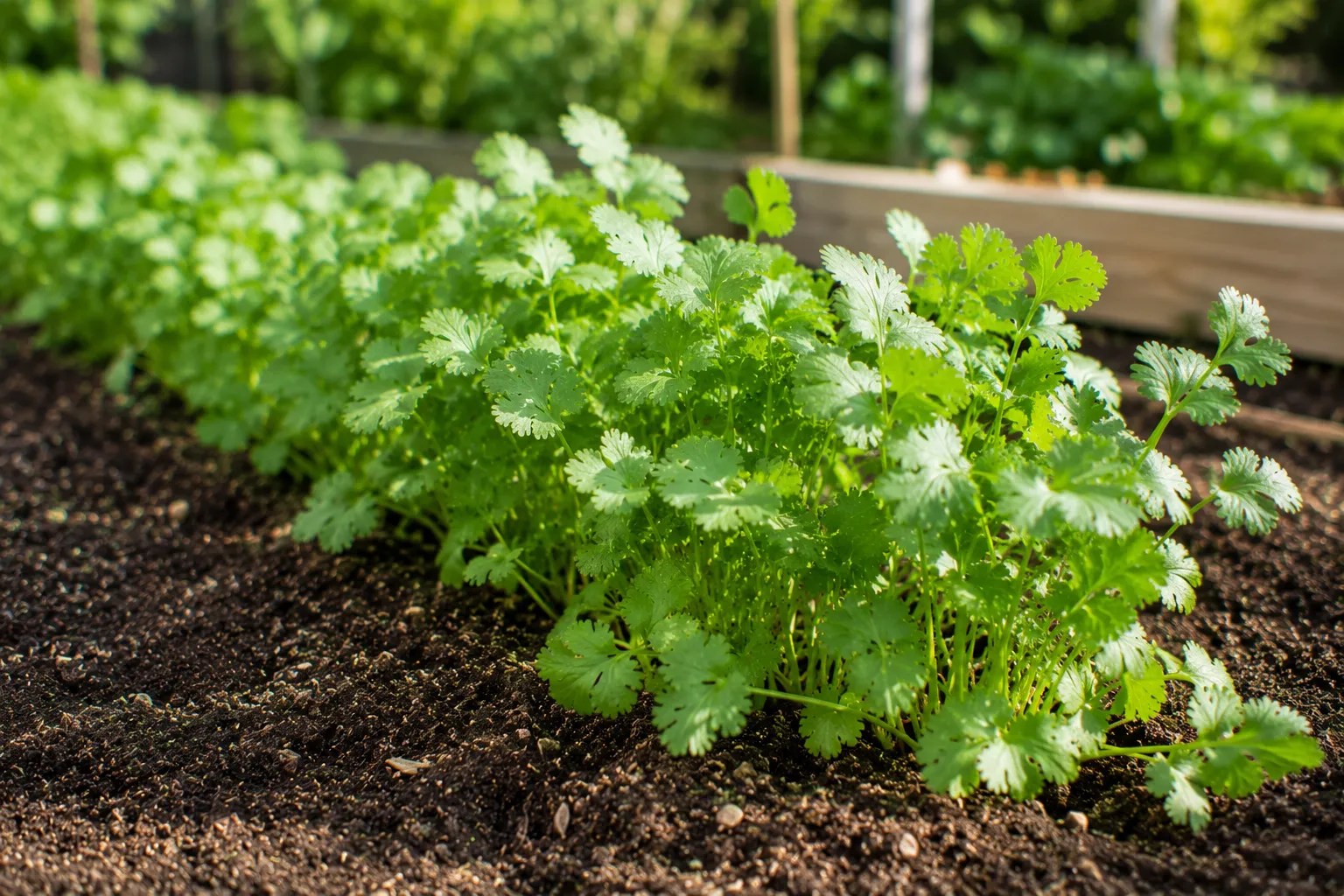
Cilantro is the fastest bolter we grow, so timing matters here more than almost anything else in the garden. Get it planted at the right time of year and it’s no trouble at all.
How to Grow Cilantro
Planting
Direct-sow in early spring, February into March, or in fall come September, cilantro actually prefers our mild winters to our summers. Sow seed a quarter-inch deep and keep the bed consistently moist until it germinates, which can take 1–2 weeks. Skip starting it indoors; like most herbs with a taproot, it doesn’t transplant well.
Watering & feeding
Keep soil evenly moist, cilantro’s shallow roots dry out fast, and that stress pushes it to bolt even sooner than the heat alone would. One light feeding at planting is usually all it needs.
Harvest
Cut outer leaves as needed once the plant has 6 or more true leaves, always leaving the center to keep growing. The moment daytime heat climbs consistently above 80°F, cilantro sends up a flower stalk and the leaves turn bitter fast, there’s no stopping it once it starts, so plan for a short, productive window rather than fighting it. We let a few plants go ahead and bolt on purpose: the flowers bring in beneficial insects, and what it drops afterward is coriander, well worth drying and saving. Succession-sow a new patch every 3 weeks through the cool season for a steady supply instead of one short burst.
Grows Well With
Cilantro bolts fast no matter what you do, so let a few plants flower near peppers and tomatoes. The blooms draw in beneficial insects that keep aphids and hornworms in check. See all our companion planting pairs →
When to Plant
Direct sow February through March, and again in September for a fall crop. Cooler nights in September mean less bolting risk. See the full planting calendar →
Buy the Seeds We Use

From the Seed Center
Shop Cilantro Seeds
$1.25
From the Kitchen: Recipes Using Cilantro
Looking for recipe ideas? Browse the full Recipe Book.