
Growing Bell Peppers
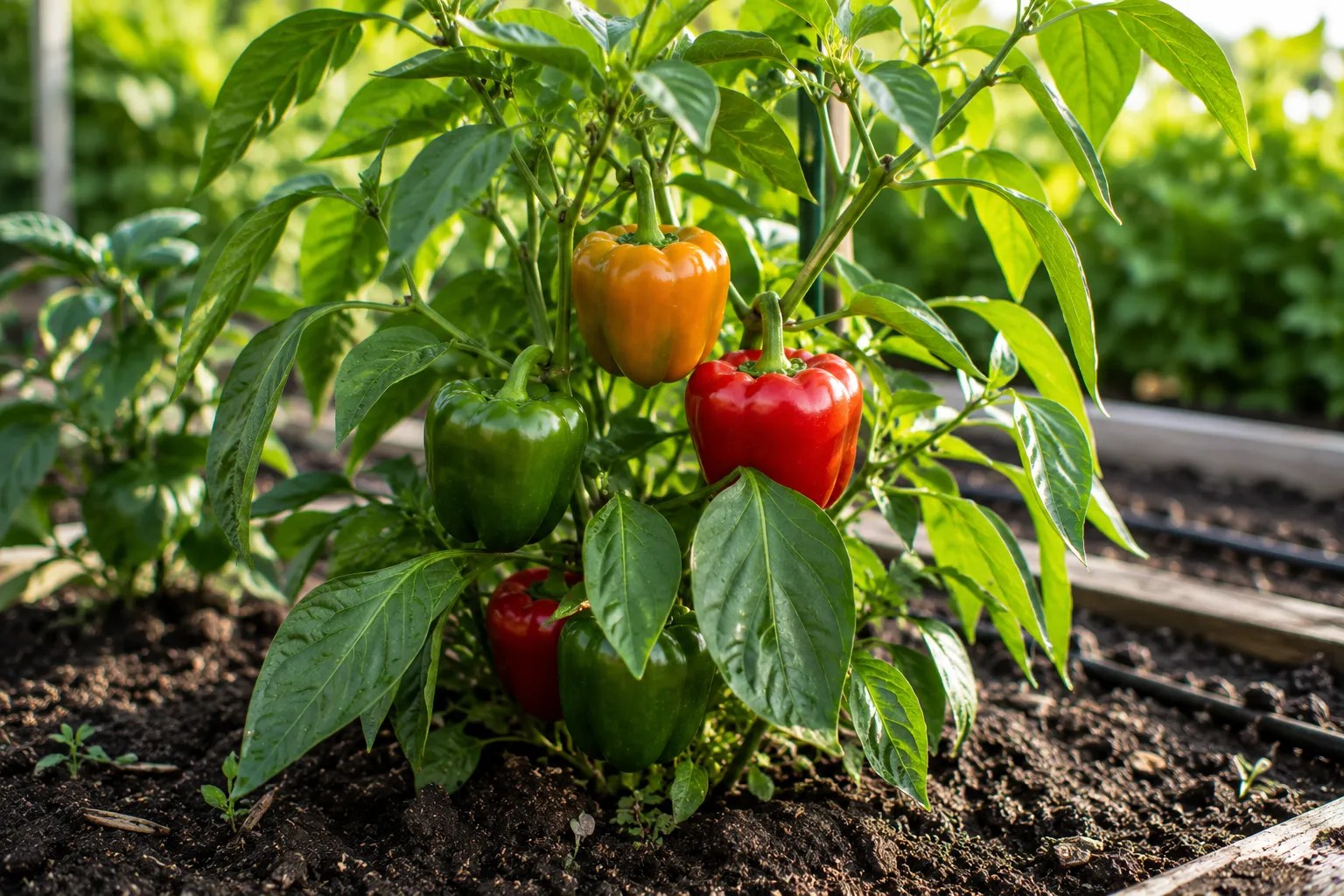
Bell peppers are one of the easiest, most rewarding plants in our garden, sweet, thick-walled, and just as good roasted as they are stuffed. Here’s exactly how we grow ours.
How to Grow Bell Peppers
Planting
Start seeds indoors 8–10 weeks before your last frost date, bell peppers are slow to germinate and want warm soil (75–85°F) to do it well. Don’t rush them outside: transplant only after nights stay above 55°F, and harden off seedlings over a week before they go in the ground.
Watering & feeding
Keep soil evenly moist, peppers hate drying out between waterings, and it shows up as blossom drop. We feed every 3–4 weeks with a balanced organic fertilizer once flowering starts, and always with a layer of mulch to hold moisture through the South Carolina summer.
Harvest
You can pick bell peppers green, but leave them on the plant another 2–3 weeks and they’ll ripen to red, orange, or yellow with a noticeably sweeter flavor. Cut, don’t pull, peppers snap the branch easily.
Grows Well With
Keep bell peppers some distance from jalapenos and other hot peppers. Cross-pollination can make your sweet peppers spicier than expected. See all our companion planting pairs →
When to Plant
Start indoors early-to-mid February, 8 to 10 weeks before last frost. Peppers are slow to germinate, so use lights or a heat mat. Transplant after mid-April. See the full planting calendar →
Buy the Seeds We Use

From the Seed Center
Shop Bell Pepper Seeds
$1.25
From the Kitchen: Recipes Using Bell Peppers

Bell Pepper & Jalapeno Jelly
Sweet-heat pepper jelly, the jar that shows up at every gift exchange and church potluck we've been part…

Garden Gazpacho
Cold, bright tomato-cucumber-pepper soup that tastes like the garden in a bowl.

Southern Shakshuka
Our own bell peppers, stuffed the way Brenda's family always made them.